
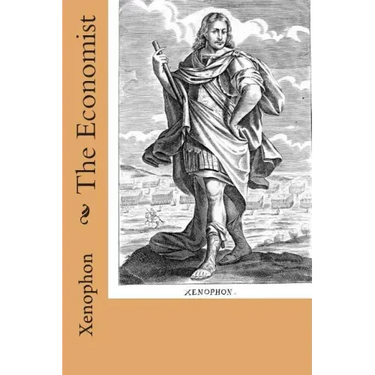

The Economist - Paperback
 The Economist - Paperback
$14.90
/
The Economist - Paperback
$14.90
/

products.product.pickup_availability.unavailable

Your payment information is processed securely. We do not store credit card details nor have access to your credit card information.


by H. G. Dakyns (Translator), Xenophon (Author)
Xenophon ( c. 430 - 354 BC), son of Gryllus, of the deme Erchia of Athens, also known as Xenophon of Athens, was a Greek historian, soldier, mercenary, and student of Socrates. Xenophon wrote about domestic issues in his Economics and defined the responsibilities of a wife as "the overseer of the home and children" and marriage as a "partnership ordained by the gods." He is best known as the author of Anabasis.
Author Biography
Xenophon of Athens (c. 430-354 BC) was an ancient Greek philosopher, historian, soldier, mercenary, and student of Socrates. As a historian, Xenophon is known for recording the history of his contemporary time, the late-5th and early-4th centuries BC, in such works as the Hellenica, about the final seven years and the aftermath of the Peloponnesian War (431-404 BC), a thematic continuation of Thucydides' History of the Peloponnesian War. As one of the Ten Thousand (Greek mercenaries), he also participated in Cyrus the Younger's failed campaign to claim the Persian throne from his brother Artaxerxes II of Persia and recounted the events in Anabasis, his most notable history. Like Plato (427-347 BC), Xenophon is an authority on Socrates, about whom he wrote several books of dialogues (the Memorabilia) and an Apology of Socrates to the Jury, which recounts the philosopher's trial in 399 BC.

