

BooksCloudSKU: 9798327887091
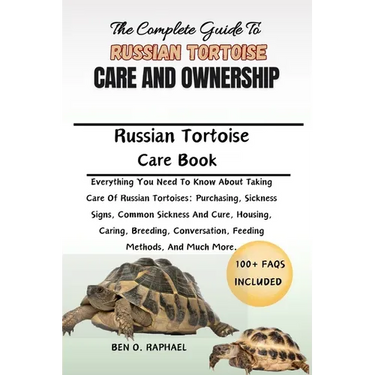
The Complete Guide to Russian Tortoise Care and Ownership: Everything You Need To Know About Taking Care Of Russian Tortoises: Purchasing, Sickness Si - Paperback
$18.48
/
Shipping calculated at checkout.
In stock (50)
$18.48
 The Complete Guide to Russian Tortoise Care and Ownership: Everything You Need To Know About Taking Care Of Russian Tortoises: Purchasing, Sickness Si - Paperback
$18.48
/
The Complete Guide to Russian Tortoise Care and Ownership: Everything You Need To Know About Taking Care Of Russian Tortoises: Purchasing, Sickness Si - Paperback
$18.48
/

The Complete Guide to Russian Tortoise Care and Ownership: Everything You Need To Know About Taking Care Of Russian Tortoises: Purchasing, Sickness Si - Paperback
$18.48
/
products.product.pickup_availability.unavailable
Still deciding?

Payment & Security
Your payment information is processed securely. We do not store credit card details nor have access to your credit card information.
Security
Related categories


High-Quality MaterialsMade with premium materials for long-lasting use.
Easy to UseSimple design for quick setup and convenience.
Versatile & Multi-PurposePerfect for home, office, or on-the-go.
Satisfaction GuaranteeLove it or return it for a full refund.
by Ben O. Raphael (Author)
A Synopsis of the Species:
Small to medium-sized Russian tortoises (Agrionemys horsfieldii, sometimes called Testudo horsfieldii) are indigenous to regions of Afghanistan, Pakistan, Iran, and Russia. Due to their unique look and resilient character, they have gained popularity as pets among arachnophiles. Their popular moniker, "Russian tortoise," conceals their wider range of geographic distribution, which includes rocky outcrops and deserts. Distribution and Natural Habitat The dry and semi-arid habitats that Russian tortoises live in in the wild are marked by little flora and significant temperature swings. The tortoises in these areas have to adjust to a variety of weather conditions since they often experience scorching summers and chilly winters. They may be found at heights of up to 1,500 meters above sea level. By nature, Russian tortoises construct deep burrows to avoid the intense surface temperatures and to shield themselves from potential predators. Their burrows may be rather large, providing a more constant environment with temperature and humidity. For the purpose of providing an appropriate environment in captivity and guaranteeing the lifespan and well-being of the tortoise, it is essential to comprehend its native habitat. Fundamental traits and actions In comparison to other tortoise species, Russian tortoises are tiny, usually growing to a length of 15-25 cm (6-10 inches). In general, males are smaller than females, with longer tails and more noticeable anal scutes. In their native environments, their carapaces, which are often tan to olive in hue with darker areas, provide excellent concealment. These tortoises are renowned for being lively and curious animals. Russian tortoises, in contrast to some other reptiles that could stay inactive, often investigate their surroundings, engage with them, and display a variety of activities that speak to their health and happiness. For pet owners, their degree of activity may be a plus since it can make them more intriguing and entertaining to watch. The primary food source for herbivorous Russian tortoises is a range of fibrous plants. They get the nutrition they need to be healthy by grazing on grasses, weeds, and leafy greens in the wild. Their digestive system and general health benefit greatly from this diet's high fiber content and low protein content.
Number of Pages: 178
Dimensions: 0.38 x 9 x 6 IN
Publication Date: June 07, 2024
Free shipping on all U.S. orders
Easy returns and exchanges
30 day money back guarantee

