
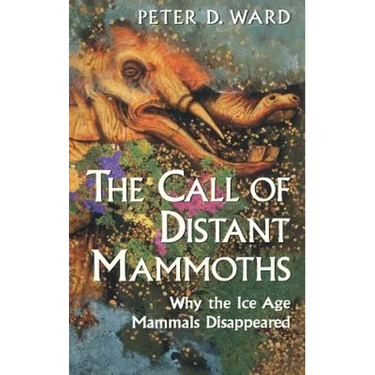

The Call of Distant Mammoths: Why the Ice Age Mammals Disappeared - Hardcover
 The Call of Distant Mammoths: Why the Ice Age Mammals Disappeared - Hardcover
$44.99
/
The Call of Distant Mammoths: Why the Ice Age Mammals Disappeared - Hardcover
$44.99
/

products.product.pickup_availability.unavailable

Your payment information is processed securely. We do not store credit card details nor have access to your credit card information.


by Peter D. Ward (Author)
Just 12,000 years ago - at the height of the last Ice Age - saber-toothed tigers, giant ground sloths, camels, hippos and the great herds of proboscideans: giant mastodons and mammoths, extinct relatives of the elephant, roamed the land where skyscrapers now stand. Why are these splendid creatures no longer with us? This compelling book explores the reasons for these extinctions and provides a tour of mass extinctions throughout earth's history, including the great comet crash that killed off the dinosaurs. Brilliantly written, The Call of Distant Mammoths is an engaging exploration of the history of life and the importance of humanity as an evolutionary force.
Back Jacket
Why are the great mammals that once walked the earth now largely extinct outside of Africa? Of the two suspected culprits, climate change and human hunting, Ward builds a compelling case for human hunting. Humans arrived in Australia about 40,000 years ago, and the marsupial lions and giant kangaroos vanished soon after; they came to New Zealand 2,000 years ago, and the giant moa was quickly gone; and the American extinction coincides with the spread of the first human population there. In order to understand what happened in the Ice Age, Ward takes us on a tour of mass extinctions through earth's history. He presents a compelling account of the great comet crash that killed off the dinosaurs and describes other extinctions that were even worse. In so doing he introduces us to a profound paradigm shift now taking place in paleontology: rather than arising from the gradual workings of everyday forces, all mass extinctions are due to unique, catastrophic events. They throw a wild card into the game of evolution and start the contest anew.

