
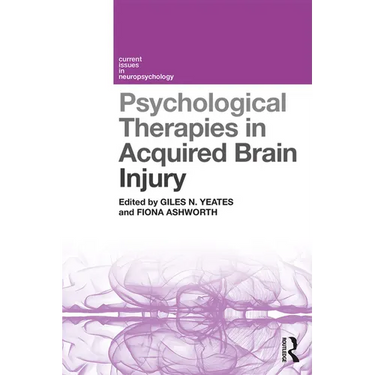

Psychological Therapies in Acquired Brain Injury - Paperback
 Psychological Therapies in Acquired Brain Injury - Paperback
$105.80
/
Psychological Therapies in Acquired Brain Injury - Paperback
$105.80
/

products.product.pickup_availability.unavailable

Your payment information is processed securely. We do not store credit card details nor have access to your credit card information.


by Giles N. Yeates (Editor), Fiona Ashworth (Editor)
The psychological impact of an acquired brain injury (ABI) can be devastating for both the person involved and their family. This book describes the different types of psychological therapies used to ameliorate psychological distress following ABI.
Each chapter presents a new therapeutic approach by experts in the area. Readers will learn about the key principles and techniques of the therapy alongside its application to a specific case following ABI. In addition, readers will gain insight into which approach may be most beneficial to whom as well as those where there may be additional challenges. Covering a wide array of psychological therapies, samples range from more historically traditional approaches to those more recently developed.
Psychological Therapies in Acquired Brain Injury will be of great interest to clinicians and researchers working in brain injury rehabilitation, as well as practitioners, researchers and students of psychology, neuropsychology and rehabilitation.
Author Biography
Giles N. Yeates is Editor of the journal and book series Neuro-Disability & Psychotherapy, in addition to the Brain Injury book series (Routledge Books). As a clinical neuropsychologist in community neurorehabilitation, his clinical work and research focuses on the innovation of psychological therapies and support of relationships following acquired brain injury, and he has published widely on these topics. Dr Yeates is currently innovating the use of Tai Ji in neurorehabilitation.
Fiona Ashworth is a clinical psychologist and senior lecturer who has worked with people with acquired brain injuries for over 20 years. She trained as a clinical psychologist at Oxford University and went on to work at the Oliver Zangwill Centre for Neuropsychological Rehabilitation where her passion for working psychotherapeutically with people with acquired brain injuries began. She continues her clinical work alongside researching psychological distress and its amelioration following acquired brain injury.

