
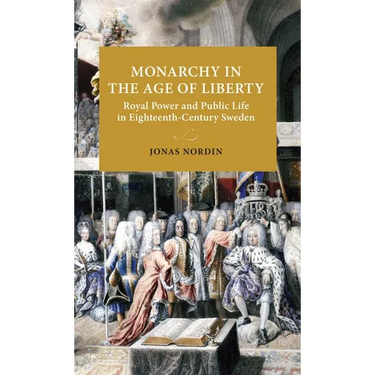

Monarchy in the Age of Liberty: Royal Power and Public Life in Eighteenth-Century Sweden - Hardcover
 Monarchy in the Age of Liberty: Royal Power and Public Life in Eighteenth-Century Sweden - Hardcover
$70.18
/
Monarchy in the Age of Liberty: Royal Power and Public Life in Eighteenth-Century Sweden - Hardcover
$70.18
/

products.product.pickup_availability.unavailable

Your payment information is processed securely. We do not store credit card details nor have access to your credit card information.


by Jonas Nordin (Author)
Does monarchy need a king? Historical investigations generally treat monarchy as a source of power only. When kings are stripped of their powers, historical interest in monarchy is lost and focus shifts elsewhere. This book takes a different approach. When studying Sweden during the Age of Liberty (1718-1772), a time and place where rulers were historically weak, the philosophical rationale of monarchy comes to the fore. Monarchy is the most common form of government in European history, with an ideological foundation on a par with republicanism; but 'monarchism' is rarely given serious sociopolitical consideration by historians or political scientists.
This thorough investigation of monarchy will be of interest to historians, political scientists, and art and media historians, not only for its far-reaching implications but also for its innovative combination of a wide variety of sources.Back Jacket
What was the function of monarchy when the monarch had none? After the death of Sweden's King Charles XII in 1718, absolutism was abolished, and the new Constitution reduced the monarch to a mere figurehead. The monarchy nevertheless continued to be an indispensable part of the political system. This book explains the role of the king in the politics of the Age of Liberty (1718-72), exploring the image of the monarch conveyed through the information channels of the time, and clarifying the opinions about the monarch held by ordinary subjects.
Using a wide range of sources and many images, historian Jonas Nordin describes a time when the influence of kings was drastically diminished. For posterity, the ultimate symbol of the Swedish monarch's powerlessness has been the replacement of the king's signature by a dry stamp; but this is one of the many paradoxes of the Age of Liberty, as the stamp was actually introduced to save the monarchy. While the monarch's executive power was curtailed, his symbolic significance and public presence increased. Subjects learned more about the public and private lives of their rulers than ever before, and the era saw some of the most lavish royal ceremonies in Swedish history. Portraying one of the most peculiar forms of government of the eighteenth century, this book also offers new perspectives on the intellectual history of Europe in general.Author Biography
Jonas Nordin is Professor of Book and Library History at Lund University, Sweden

