

BooksCloudSKU: 9798608395659
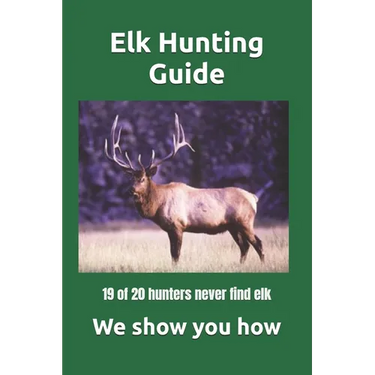
Elk Hunting Guide: What you need to know to be a successful Elk Hunter - Paperback
$31.57
/
Shipping calculated at checkout.
In stock (50)
$31.57
 Elk Hunting Guide: What you need to know to be a successful Elk Hunter - Paperback
$31.57
/
Elk Hunting Guide: What you need to know to be a successful Elk Hunter - Paperback
$31.57
/

Elk Hunting Guide: What you need to know to be a successful Elk Hunter - Paperback
$31.57
/
products.product.pickup_availability.unavailable
Still deciding?

Payment & Security
Your payment information is processed securely. We do not store credit card details nor have access to your credit card information.
Security
Related categories


High-Quality MaterialsMade with premium materials for long-lasting use.
Easy to UseSimple design for quick setup and convenience.
Versatile & Multi-PurposePerfect for home, office, or on-the-go.
Satisfaction GuaranteeLove it or return it for a full refund.
by Michael Miller (Author)
The average out-of-state elk hunter spends over $4,000 to go elk hunting. Then, nineteen out of twenty of them fail to find an elk. This is a shame!
I live in the mountains of Colorado, amongst elk herds. The picture of the bull elk on the cover of my book was taken 200 yds. from my house. I have the opportunity to study elk behavior, as well as the behavior of the out-of-state elk hunters. Thus, this book. I explain how the new-to-the-area elk hunter can find his herd. This is stuff I learned myself.
Elk are creatures of habit. They follow patterns of movement. Basically, they bed down from about an hour after daybreak until mid-afternoon. They bed down in the heaviest shelter that they can find, as densely wooded as possible, in order to protect themselves from predators such as bears, and mountain lions. Then in later afternoon, they head from their bedding area to their watering hole where they will get their daily drink. After watering, they head for their favorite pasture. They graze all night, then return to their bedding area the next morning. Knowing this can give you a great advantage. Our info on how to track elk will help you to locate a good site to ambush them as they move from their one area to another. I usually attempt to ambush them as they move from their watering hole to their pasture. This is usually late afternoon. I have bagged 7 elk with this technique. I am now too old to get out in the woods, but I can tell you how to do it! New to your elk hunting area? We advise you what to do; scout the road edges, find where elk herds cross the road, then locate their probable grazing area (it will be close by). Then set up your ambush so that they pass by as they do their daily late afternoon habitual trek from their sleeping area (a dense and protected wooded area) to their pasture area. This technique has never failed me, and has made me one of the most successful elk hunters in my rural Colorado community.
Number of Pages: 70
Dimensions: 0.15 x 9 x 6 IN
Publication Date: February 02, 2020
Free shipping on all U.S. orders
Easy returns and exchanges
30 day money back guarantee

