
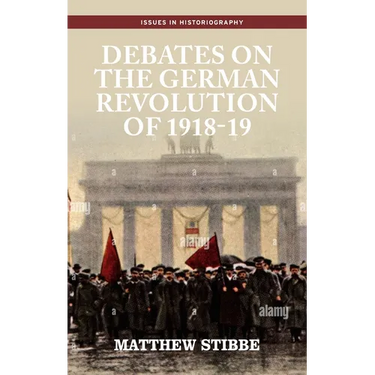

Debates on the German Revolution of 1918-19 - Paperback
 Debates on the German Revolution of 1918-19 - Paperback
$58.21
/
Debates on the German Revolution of 1918-19 - Paperback
$58.21
/

products.product.pickup_availability.unavailable

Your payment information is processed securely. We do not store credit card details nor have access to your credit card information.


by Matthew Stibbe (Author)
In November 1918 a revolution overthrew the old imperial system in Germany and inaugurated a republic. The revolution was formally completed in August 1919 when the social democrat Friedrich Ebert was sworn in as president. By this time, however, many of the revolution's original aims and intentions had been swallowed up by new political concerns and lived experiences. For contemporaries the meaning of '9 November' changed, becoming increasingly contested between rival parties, military experts and scholars.
This book examines how the debate on the revolution has evolved from August 1919 to the present day. It takes the reader through the ideological battles of the 1920s and 30s into the equally politicised historical writing of the cold war period. It ends with a consideration of the marginalisation of the revolution in academic research since the 1980s, and its revival from 2010.Back Jacket
On 9 November 1918, a Revolution overthrew the old imperial system in Germany and forced the abdication of the Kaiser and other princely rulers. Just over nine months later, on 21 August 1919, Friedrich Ebert - a man of the people but also a fierce anti-Communist - was sworn in as President of the Weimar Republic. Hopes for a new age of democracy, peace and security were to be sorely tested in the months, years and decades that followed. Had the Revolution betrayed its own supporters or the German nation as a whole? Had it failed at all? And if so, were its failings the result of missed opportunities or deliberate sabotage? This book provides a comprehensive overview of the historical debate on the German Revolution from 1919 to the present day.
For much of the twentieth century, the Revolution was fiercely debated between left and right in Germany, and between progressive and conservative scholars. A thirty-year battle between fascist, conservative and socialist camps was followed, after 1948, by the Cold War division of Europe and a tendency in both West and East Germany to use rival interpretations of 1918-19 as a means of solidifying their own separate national, political and ideological identities. But from the 1980s onwards, the German Revolution began to disappear from academic debates on the recent past. This book seeks to explain why this happened, and why the Revolution has made something of a comeback since 2010. In so doing, it examines the strengths and weaknesses of new conceptual approaches to revolutions, and makes the case for a fresh synthesis between cultural and political history.Author Biography
Matthew Stibbe is Professor of Modern European History at Sheffield Hallam University.

