
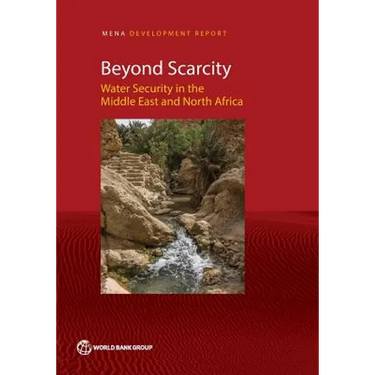

Beyond Scarcity: Water Security in the Middle East and North Africa - Paperback
 Beyond Scarcity: Water Security in the Middle East and North Africa - Paperback
$75.31
/
Beyond Scarcity: Water Security in the Middle East and North Africa - Paperback
$75.31
/

products.product.pickup_availability.unavailable

Your payment information is processed securely. We do not store credit card details nor have access to your credit card information.


by The World Bank (Editor)
Water has always been a source of risks and opportunities in the Middle East and North Africa. Yet rapidly changing socioeconomic, political, and environmental conditions make water security a different, and more urgent, challenge than ever before. This report shows that water security is about much more than just coping with water scarcity. It entails ensuring the delivery of affordable and high quality water to citizens in order to reinforce relationships between service providers and customers and contribute to a renewed social contract. It involves managing the impacts of migration on water supplies to ensure -- against a backdrop of historic levels of displacement -- that both host and refugee communities enjoy equitable and reliable access without degrading water resources. As the report describes, water security is an urgent target, but also a target within reach. A host of potential solutions to the region's water management challenges exist. To make these solutions work, clear incentives are needed to change the way water is managed, conserved, and allocated. Countries in the region also will need to engage civil society and youth as well as promote social inclusion.
Author Biography
The World Bank came into formal existence in 1945 following the international ratification of the Bretton Woods agreements. It is a vital source of financial and technical assistance to developing countries around the world. The organization's activities are focused on education, health, agriculture and rural development, environmental protection, establishing and enforcing regulations, infrastructure development, governance and legal institutions development. The World Bank is made up of two unique development institutions owned by its 185 Member Countries. The International Bank for Reconstruction and Development (IBRD) focuses on middle income and creditworthy poor countries and the International Development Association (IDA), which focuses on the poorest countries in the world.

