
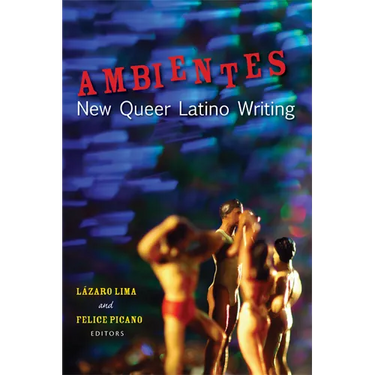

Ambientes: New Queer Latino Writing - Paperback
 Ambientes: New Queer Latino Writing - Paperback
$29.95
/
Ambientes: New Queer Latino Writing - Paperback
$29.95
/

products.product.pickup_availability.unavailable

Your payment information is processed securely. We do not store credit card details nor have access to your credit card information.


by Lazaro Lima (Editor), Louis Fisher (Foreword by)
Can a U.S. president decide to hold suspected terrorists indefinitely without charges or secretly monitor telephone conversations and e-mails without a warrant in the interest of national security? Was the George W. Bush administration justified in authorizing waterboarding? Was President Obama justified in ordering the killing, without trial or hearing, of a U.S. citizen suspected of terrorist activity? Defining the scope and limits of emergency presidential power might seem easy just turn to Article II of the Constitution. But as Chris Edelson shows, the reality is complicated. In times of crisis, presidents have frequently staked out claims to broad national security power. Ultimately it is up to the Congress, the courts, and the people to decide whether presidents are acting appropriately or have gone too far. Drawing on excerpts from the U.S. Constitution, Supreme Court opinions, Department of Justice memos, and other primary documents, Edelson weighs the various arguments that presidents have used to justify the expansive use of executive power in times of crisis. Emergency Presidential Power uses the historical record to evaluate and analyze presidential actions before and after the terrorist attacks of September 11, 2001. The choices of the twenty-first century, Edelson concludes, have pushed the boundaries of emergency presidential power in ways that may provide dangerous precedents for current and future commanders-in-chief.
Winner, Crader Family Book Prize in American Values, Department of History and Crader Family Endowment for American Values, Southeast Missouri State University
"
Author Biography
Lázaro Lima is the E. Claiborne Robins Distinguished Chair in the Liberal Arts and professor of Latin American and Iberian Studies and American Studies at the University of Richmond. He is author of The Latino Body: Crisis Identities in American Literary and Cultural Memory. Felice Picanois an accomplished author, editor, publisher, journalist, screenwriter, and playwright, and is one of the founders of the Violet Quill.

